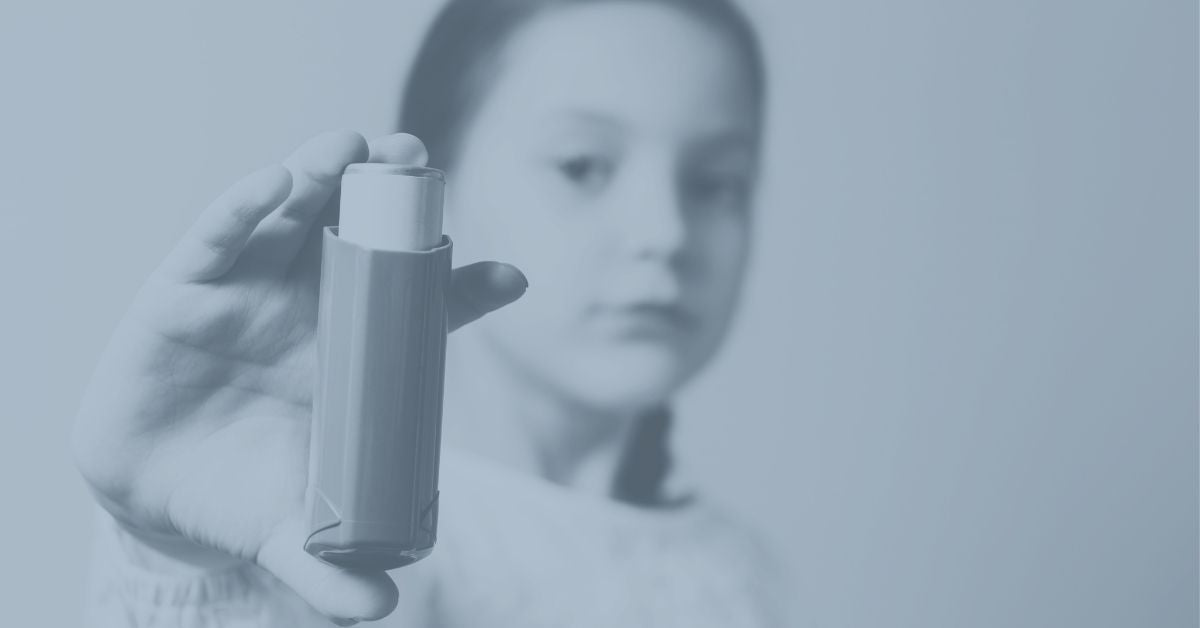
Five or six years ago, putting air purifiers in classrooms was front-page news. Today those same machines are being sold on eBay, stacked in storage sheds, and left at the curb for the garbage truck—while asthmatic children sit in the very rooms they were bought to protect. Here is why every parent and teacher should be paying attention, and the free toolkit Austin Air built to help you do something about it.
A story that made headlines once, and should again
Think back to the height of the pandemic. When schools reopened, air purifiers were everywhere in the news. Districts held press conferences. School boards approved them with real fanfare, holding the decision up as proof that they were taking the health of students and staff seriously. Most of those units were paid for with federal relief and other government funding, and for a moment it felt like the country had finally absorbed something public-health experts had been saying for decades: the air inside a school matters.
Here is the part that never made the news. Many of those same districts bought the machines but never budgeted for the replacement filters that keep them working. A filter is not forever. When it reaches the end of its life, the purifier stops cleaning the air and becomes a box with a fan inside it. And rather than spend a small fraction of the original cost to replace a filter, schools across the country began quietly getting rid of the purifiers altogether: listing them on eBay, pushing them into storage closets and sheds, even setting them out with the trash.
There is no press conference for that. No headline. The decision once celebrated as responsible is being reversed in silence.
It should be the other way around. Because the children those purifiers were bought to protect are still sitting in the room.
The pandemic ended. The need did not.
For a few short years, it seemed the pandemic had genuinely woken the world up to the importance of clean air. We spent that time talking about ventilation and filtration, even testing the air in our buildings, and making the case, finally, that what children breathe for hours a day is worth measuring and improving. Then the emergency funding ran out. And almost as quickly as the country woke up, much of it rolled over and went back to sleep.
But ask the obvious question: now that the money is gone, is the need gone too?
It is not. The need was never only about one virus, and it did not leave when the headlines did. If anything, we understand the problem far better now than we did in 2020. A classroom does not just hold the cold and flu germs shared by thirty kids in an enclosed room. It holds fine particulate matter drifting in from the carpool lane and idling buses, chemicals and VOCs off-gassing from cleaners, markers, carpet, and furniture, gases that build up in crowded rooms, pesticides tracked or sprayed indoors, and allergens like dust, mold, and pollen.
The virus was the reason we finally looked. But it was never the only thing worth seeing.
What the research actually says about that air
This is not a matter of comfort or preference. The evidence that classroom air shapes how children feel, behave, and learn has been piling up for years.
-
It changes test scores. When a gas leak led a company to install air filters in every classroom within five miles in Los Angeles, an economist tracked what happened next. Math scores rose by about 0.20 standard deviations and English by 0.18, gains comparable to cutting class size by a third, at a fraction of the cost. Air testing showed no gas in the buildings, meaning the filters were simply removing ordinary pollutants. ¹
-
Filtration works in real classrooms. A 2024 randomized trial across Los Angeles elementary schools found that classrooms running portable HEPA air cleaners had roughly 40 percent lower fine-particle (PM2.5) levels than classrooms without them. ²
-
Dirty air is linked to attention problems. In a study following more than 800,000 children, early-life exposure to nitrogen dioxide and PM2.5 was associated with a significantly higher risk of an ADHD diagnosis, even after accounting for family income and education. ⁴
-
The smallest particles reach the brain. Research on children and young adults in heavily polluted cities found that long-term exposure to fine and ultrafine particles was associated with brain inflammation, a weakened blood-brain barrier, and the early buildup of proteins linked to Alzheimer's disease, beginning in childhood. ⁵
-
Chemicals dull thinking, too. In controlled studies, elevated carbon dioxide and common VOCs measurably lowered people's cognitive performance, the very kind of focus and decision-making we ask of students all day. ⁷
-
Pesticides carry no safe dose for a child. The American Academy of Pediatrics links early pesticide exposure to pediatric cancers, reduced cognitive function, and behavioral problems, and concludes there is no level pediatricians consider beneficial for a developing child. ⁶
Now layer asthma on top of all of it. About 1 in 12 school-age children in the United States has asthma, roughly 4.6 million kids, and asthma is one of the leading causes of school absenteeism, accounting for an estimated 13.8 million missed school days a year. ³ Most of its triggers, the dust, mold, pollen, smoke, and chemical fumes, are airborne, exactly the things filtration is built to remove. And the EPA has estimated that a large share of U.S. school buildings have problems tied to indoor air quality in the first place. ⁸
A child cannot do their best thinking in air that is working against them. None of this stopped when the pandemic did.
Why this should make every parent and teacher angry
Sit with the picture for a moment. A school owns a tool, already paid for, proven to clean the air in a room. Down the hall sits a child with asthma whose next attack may be triggered by what is circulating in that very classroom. And the school's response is to unplug the tool, box it up, and wheel it out, to save the cost of a filter.
That is not a budget decision. It is a choice about whose health is worth a line item. The schools that were once ready, even eager, to protect their students have quietly moved clean air to the back burner, as if the reason for it expired along with the grant. It did not. The need was there before the pandemic, it was there during it, and it is here now.
This is the moment that should pull parents and teachers out of the slumber the rest of the country has drifted back into.
What Austin Air built, and why
Because so many schools are no longer making the responsible call on their own, Austin Air created the Parent-Teacher Toolkit, a free resource designed to put the research, the language, and the funding tools directly into the hands of the people most willing to fight for clean classrooms: parents, caregivers, and teachers.
Inside the toolkit you will find:
-
"What's Really In Classroom Air" — a downloadable, one-page guide to the pollutants in school air, where they come from, and how they affect children.
-
The case for classroom purifiers — a plain-language walkthrough of why portable purifiers matter, why an HVAC system alone is not enough, and how clean air connects to attendance, focus, and test scores.
-
Pre-written email templates — customizable letters parents and teachers can adapt to reach principals, administrators, and school boards, so the hardest part, knowing what to say, is already done.
-
Fundraising support — practical help for PTAs, families, and community groups to raise the money for purifiers and filters when the district budget will not.
-
The clinical-trial record — the independent research behind Austin Air, including studies at institutions like Johns Hopkins and Cincinnati Children's Hospital documenting reduced respiratory symptoms and fewer asthma-related emergency room visits in children. ⁹
-
Replacement filters — for the many schools that already own Austin Air units from the pandemic and simply need to put them back to work, including the option to upgrade to the newest 8-phase Immunity Machine filter, which drops into the housings they already own.
-
See Air Differently — a free virtual school assembly and classroom program that helps students understand what they breathe and why it matters.
It is worth saying plainly why Austin Air, of all companies, built this. Austin Air is the only portable air-purifier brand backed by this depth of independent clinical research, with medical-grade filtration engineered to capture 99 percent of particles down to 0.1 microns, smaller than the COVID-19 virus at roughly 0.125 microns, along with the everyday allergens, smoke, and chemical particles that fill a classroom. ⁹
Why it has to be parents and teachers
Schools rarely act on clean air because no one asks. They act when a parent sends the email, when a teacher raises it at a staff meeting, when a PTA puts it on the agenda and refuses to let it slide off. You do not need a science degree or a title to be that person. You need the facts, which the toolkit hands you, and the willingness to start the conversation.
Imagine what happens when it is not just one voice. One email becomes a dozen. One classroom becomes a hallway, then a building, then a district that decides clean air is simply how it does things now. That is a movement, and it starts with people who refuse to wait.
The pandemic gave us a rare, hard-won clarity about the air our children breathe. We do not have to let it fade. Open the Parent-Teacher Toolkit, send the email, and start the conversation in your school. The machines may have been quietly carried out the door. But the reason they were brought in never left.
References
¹ Gilraine, M. (2023). Air filters, pollution, and student achievement. Journal of Human Resources. https://jhr.uwpress.org/content/60/5/1469
² Classroom air quality in a randomized crossover trial with portable HEPA air cleaners. (2024). https://www.ncbi.nlm.nih.gov/pmc/articles/PMC12234348/
³ Centers for Disease Control and Prevention. (2018). Vital signs: Asthma in children—United States, 2001–2016. https://www.cdc.gov/mmwr/volumes/67/wr/mm6705e1.htm
⁴ Exposure to air pollution in early childhood and the association with attention-deficit hyperactivity disorder. (2020). Environmental Research. https://pubmed.ncbi.nlm.nih.gov/31810593/
⁵ Calderón-Garcidueñas, L., et al. (2008). Long-term air pollution exposure associated with brain inflammation, blood-brain-barrier disruption, and accumulation of Alzheimer's-associated proteins in children and young adults. https://pubmed.ncbi.nlm.nih.gov/18349428/
⁶ Roberts, J. R., Karr, C. J., & American Academy of Pediatrics Council on Environmental Health. (2012). Pesticide exposure in children. Pediatrics, 130(6), e1757–e1763. https://publications.aap.org/pediatrics/article/130/6/e1757/30399/Pesticide-Exposure-in-Children
⁷ Allen, J. G., MacNaughton, P., Satish, U., et al. (2016). Associations of cognitive function scores with carbon dioxide, ventilation, and volatile organic compound exposures in office workers. Environmental Health Perspectives, 124(6), 805–812.
⁸ U.S. Environmental Protection Agency. (n.d.). Indoor air quality and student health and performance / IAQ Tools for Schools. https://www.epa.gov/iaq-schools
⁹ Austin Air Systems. (n.d.). Clinical trials. https://austinairsystems.com/pages/clinical-trials