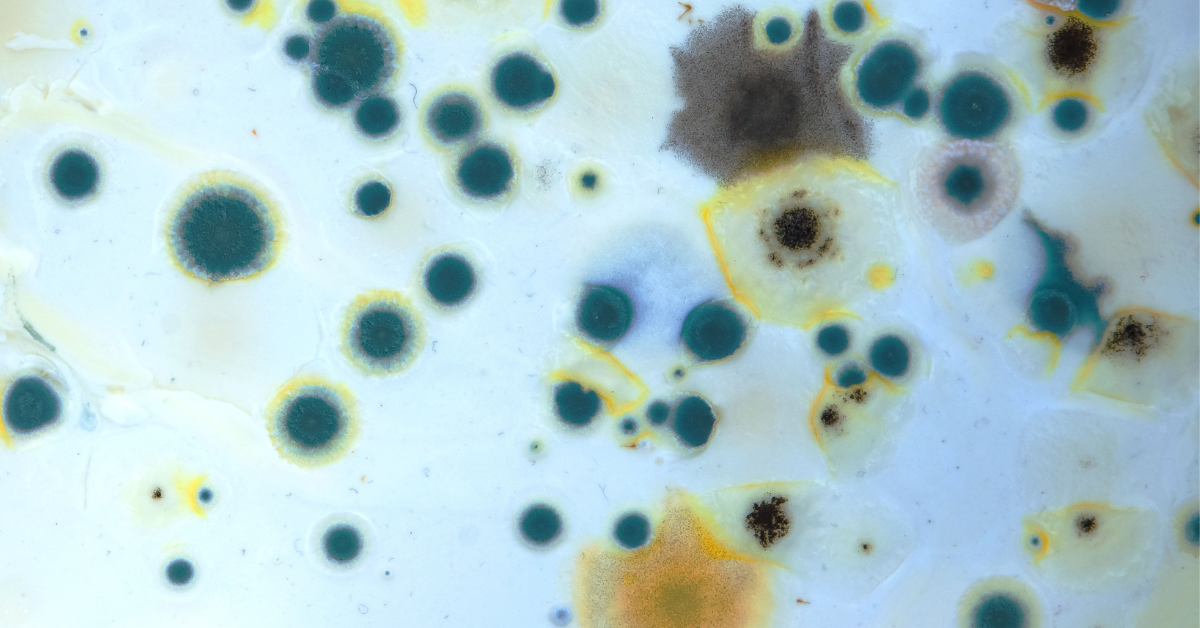
The first U.S. study to measure invasive mold disease—who’s actually at risk, and what it means for the air in your home.
KEY TAKEAWAYS
• A new CDC surveillance study—the first of its kind in the U.S.—found roughly 450 invasive mold disease cases across four Atlanta hospitals over five years (2020–2024).
• About 45% of those patients died within 90 days, and half needed a ventilator.
• Aspergillus—a mold nearly all of us inhale every day—caused 71% of the infections.
• More than one in three patients had none of the classic risk factors doctors usually look for.
• Important: this is about severe, invasive infection in mostly vulnerable, hospitalized people—not proof that everyday household mold is deadly. But it is a genuine wake-up call about moisture, indoor air, and protecting the people most at risk.
What did the new CDC mold study actually find?
In late July 2026, the CDC published the first systematic estimate of how often invasive mold disease occurs in American hospitals. Researchers reviewed 968 possible cases at four Atlanta-area hospitals between 2020 and 2024 and confirmed 449 of them as invasive mold disease—serious infections in which mold moves from the airways into the lungs, sinuses, skin, or bloodstream. ¹
The severity is what stopped experts in their tracks. Among patients tracked long enough to measure, roughly 45% died within 90 days, about half required mechanical ventilation, and a large share landed in the ICU. Most infections (about two-thirds) took hold in the lungs, and 81% of patients were sick enough to receive powerful antifungal drugs.¹
Why does a four-hospital study matter so much? Because invasive mold disease is not a nationally reportable condition—no one has been formally counting it. “It’s kind of the first time we’ve had an estimate like this,” said the CDC’s Dr. Jeremy Gold, the study’s senior author. In other words, this isn’t a sudden outbreak. It’s the first time we’ve measured a problem that was already here and largely invisible.²
Does this mean mold is only a problem if you’re already sick?
Not at all—and this is the part it’s most important to get right. It’s true that invasive mold disease—the severe infection this study measured—overwhelmingly strikes people who are already seriously ill: those with blood cancers, organ transplants, immune-suppressing medications, or recent severe COVID-19. That kind of infection isn’t contagious, and for someone with a healthy immune system, breathing everyday spores rarely turns into invasive disease; the CDC notes most of us inhale Aspergillus spores daily without getting sick. ³
But “you probably won’t get an invasive infection” is a very different statement from “mold is harmless.” Invasive disease is the extreme tip of a much larger iceberg—and everyday exposure to damp, moldy indoor air is a recognized problem for the general public, not just the hospitalized. The EPA states plainly that mold “can irritate the eyes, skin, nose, throat, and lungs of both mold-allergic and non-allergic people.”[7] The CDC points to sufficient evidence linking indoor mold to upper-respiratory symptoms, coughing, and wheezing in otherwise healthy people. ⁸ Mold simply isn’t good for anyone to breathe.
So why does one person shrug off a musty basement while another in the same house battles constant congestion, headaches, fatigue, or brain fog? Because tolerance is deeply individual. How well your body handles mold depends on a web of factors—your genetics and how efficiently you clear toxins, your total “body burden” from other exposures and health conditions, your age (children and older adults are more vulnerable), your immune function, even your current stress load. The CDC notes, for example, that early mold exposure has been linked to asthma in some children who are genetically susceptible.⁸ Same room, two people, very different outcomes—which is exactly why mold problems are so often missed or dismissed.
That’s why this study matters even if you feel perfectly healthy. Not because a moldy shower is about to send a well person to the ICU—but because it’s a loud, data-backed reminder that the mold in our buildings is a real health variable, that the people we care about most—young children, aging parents, anyone pregnant, run-down, or immune-compromised—sit at the higher-risk end, and that lowering exposure is worth doing now, long before anyone in the home becomes the vulnerable one.
The finding that should change how we think about risk
Here is the detail buried beneath the headlines: more than a third of patients—about 35%—had none of the classic risk factors that doctors are trained to watch for. They weren’t transplant recipients or chemotherapy patients. That’s a problem, because the whole system for catching these infections early depends on knowing who’s at risk. When a third of cases don’t fit the profile, they get caught late—and late is exactly when mold infections turn deadly. ¹
COVID-19 sharpened this picture. In the study’s early years, a meaningful share of cases followed recent COVID infection, and those patients fared far worse: 90-day mortality of roughly 66% versus 41% in patients without COVID. A serious respiratory illness—not just a transplant or cancer—can be enough to tip the balance. ¹
The mold at the top of the list is one you breathe every day
The single most common culprit was Aspergillus, responsible for 71% of infections. This is not an exotic organism. Aspergillus spores are everywhere—indoors and outdoors, in soil, on decaying leaves, and, notably, in damp buildings and water-damaged homes. It thrives where there is moisture. ³
That’s the quiet through-line connecting a hospital surveillance study to your living room: the risk isn’t some rare spore, it’s an everyday one, and its favorite habitat is dampness. For most people that’s harmless. But for a household member who is older, immune-compromised, recovering from surgery or a serious illness, or living with chronic lung disease, the amount of mold circulating in indoor air stops being trivial and starts being relevant. A separate CDC-authored analysis found that mold-related medical visits already span every age group—from infants to older adults—and fall unevenly across communities. ⁴
Why experts expect mold illness to become more common
The researchers were candid that this is likely to grow. Mold blooms after water—and floods, hurricanes, and heavy-rain events are becoming more frequent and more severe. “Mold exposure is a recurring problem in the wake of hurricanes, floods and other natural disasters influenced by climate change,” Dr. Gold noted, and outside experts agreed that fungal infections will likely rise as the climate shifts. ²
Every flooded basement, every slow roof leak, every humid crawlspace is a potential mold reservoir. As those events multiply, so does the amount of mold in the buildings where we spend about 90% of our lives.
What the CDC data means for the air inside your home
You don’t need to panic. You do need a plan that matches your household. Two levers matter most, and they work together:
1. Control moisture—this is step one, always
Mold is a water problem before it’s an air problem. Fix leaks quickly, dry any water damage within 24–48 hours, keep indoor humidity in a healthy range, ventilate bathrooms and kitchens, and address flooding promptly and thoroughly. No air cleaner substitutes for removing the moisture that lets mold grow in the first place.
2. Reduce the spores already airborne—with real filtration
Once mold is disturbed, spores go airborne—and airborne is exactly what a true HEPA air purifier is built to capture. Mold spores generally range from about 2 to 10 microns, well within the range that genuine mechanical HEPA filtration removes. This isn’t a fringe idea: hospitals rely on the very same principle, using HEPA-filtered “protective environment” rooms to lower the airborne Aspergillus spore count for their most vulnerable patients—an approach peer-reviewed research links to fewer invasive mold infections. ⁶ Filtration matters for more than spores, too. Active mold also releases mycotoxins and musty-smelling microbial gases (VOCs). Because mycotoxins largely ride on mold spores and fine particles, a true HEPA filter captures them right along with the spores—and a deep bed of activated carbon, which every Austin Air unit carries, then adsorbs the gases, VOCs, and odors that come with a damp, moldy environment.
Where Austin Air fits—and where it doesn’t
We’ll be straight with you: an air purifier does not treat, cure, or prevent an infection, and no filter replaces fixing a moisture problem. What a serious air cleaner does is reduce the airborne particles—including mold spores—that circulate through the rooms where your family sleeps and breathes. Austin Air units use Medical Grade HEPA proven to remove 99% of airborne particles down to 0.1 microns, combined with a deep bed of activated carbon and zeolite for gases and odors—no ozone, no gimmicks, just mechanical filtration.
Two things set the machines apart for a situation like this. First, they’re backed by more independent, peer-reviewed clinical research than any other portable air purifier brand—studies at institutions including Johns Hopkins and Cincinnati Children’s Hospital have documented measurable reductions in indoor pollutants and real clinical improvements in vulnerable groups. ⁵ Second, the filters are engineered to last up to five years, so the machine keeps doing its job for years rather than months. Every unit is handcrafted and built in Buffalo.
For households actively dealing with mold, we put together a Mold Recovery Home Bundle designed to cover the bedrooms and main living spaces where clean air matters most—but the more important resources below are completely free.
Free help: the Mold Solutions Summit
If mold is affecting your home or your health, the most valuable thing we can point you to costs nothing. Austin Air created the free Mold Solutions Summit—a first-of-its-kind national event bringing together 15+ doctors, researchers, remediation specialists, real-estate experts, and legal advocates on mold exposure, the health effects in adults and children, testing and remediation, and your housing and legal rights. You can watch it now at TheMoldSummit.com.
The same hub also serves as a practical mold toolkit—the education, expert guidance, and next steps to help you identify a problem, understand your options, and protect the people in your home who are most at risk. Whether or not you ever buy anything from us, we’d rather you have the facts.
Frequently asked questions
Is invasive mold disease contagious?
No. Invasive mold disease is not spread from person to person. People develop it by inhaling or otherwise being exposed to mold spores from the environment, and it becomes dangerous mainly in people with weakened immune systems or serious underlying illness.
What are common symptoms of mold-related illness?
Everyday mold exposure most often shows up as allergy- and asthma-type symptoms—congestion, coughing, wheezing, watery or itchy eyes, and worsening asthma. Invasive mold disease is a separate, far more serious condition seen chiefly in immune-compromised patients and can include fever, chest symptoms, and sinus involvement. If you’re concerned about symptoms, talk with a healthcare provider.
Who is most at risk from mold?
People with weakened immune systems (from cancer, transplants, or immune-suppressing medications), those with chronic lung conditions or an already-high body burden, people recovering from severe respiratory infections like COVID-19, and—for everyday allergic symptoms—anyone sensitive to mold, including children and older adults.
Can an air purifier prevent mold illness?
An air purifier cannot prevent, treat, or cure an infection, and it does not replace fixing the moisture source that lets mold grow. What a true HEPA purifier can do is capture airborne mold spores and other fine particles, reducing what circulates in your indoor air—one sensible layer alongside moisture control and remediation.
The new CDC numbers aren’t a reason to fear the air in your home—they’re a reason to understand it. Fix the moisture, filter the air, protect the vulnerable, and use the free resources built to help.
References
¹ Gold, J. A. W., Hurst, S., Jackson, B. R., et al. (2026). Active surveillance for invasive mold disease—Four hospitals, Atlanta, Georgia, 2020–2024. MMWR Surveillance Summaries, 75. https://www.cdc.gov/mmwr/volumes/75/ss/ss7505a1.htm
² Associated Press. (2026, July 29). Study suggests the threat of mold-associated illnesses may be underappreciated. U.S. News & World Report. https://www.usnews.com/news/health-news/articles/2026-07-29/study-suggests-the-threat-of-mold-associated-illnesses-may-be-underappreciated
³ Centers for Disease Control and Prevention. (n.d.). About aspergillosis. https://www.cdc.gov/aspergillosis/about/index.html
⁴ Benedict, K., Chew, G. L., Hsu, J., Toda, M., & Gold, J. A. W. (2024). Healthcare use and health disparities associated with mold exposure diagnosis codes. Journal of Allergy and Clinical Immunology: In Practice, 12(6). https://stacks.cdc.gov/view/cdc/157942
⁵ Austin Air Systems. (n.d.). Clinical trials. https://austinairsystems.com/pages/clinical-trials
⁶ The Center for Health Design. (n.d.). Efficacy of high-efficiency particulate air filtration in preventing aspergillosis in immunocompromised patients. https://www.healthdesign.org/chd/knowledge-repository/efficacy-high-efficiency-particulate-air-filtration-preventing-aspergillosi
⁷ U.S. Environmental Protection Agency. (n.d.). Mold and health. https://www.epa.gov/mold/mold-and-health
⁸ Centers for Disease Control and Prevention. (n.d.). About mold. https://www.cdc.gov/mold-health/about/index.html
∗ Proven to remove 99% of airborne particles down to 0.1 microns. Austin Air purifiers are not medical devices and are not intended to diagnose, treat, cure, or prevent any disease. Always address the source of moisture and consult a qualified professional for remediation and a healthcare provider for medical concerns.
Last updated August 6, 2026