You may already have money that can cover this — and not realize it. Here’s what HSA and FSA accounts are, whether an air purifier qualifies, and how to pay with one at checkout.
KEY TAKEAWAYS
-
You can now pay with HSA or FSA funds at Austin Air. At checkout, choose “Pay with HSA/FSA” instead of Credit Card.
-
It used to take a phone call. Now it doesn’t. HSA/FSA orders previously had to be placed over the phone with one of our representatives. You can now do the whole thing yourself, on the site, whenever it suits you.
-
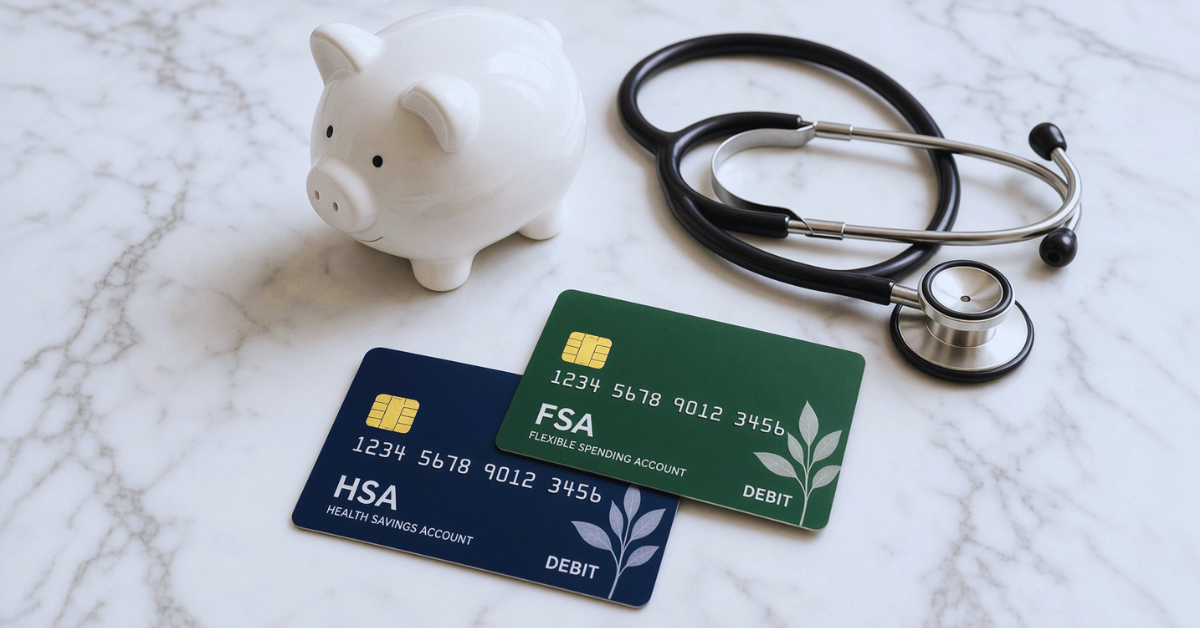
HSA and FSA cards are not insurance. They’re tax-advantaged accounts you fund with your own pre-tax dollars, usually through your employer. Many people have one and don’t recognize the card in their wallet.
-
Eligibility isn’t automatic. The IRS treats medical expenses as costs for the “diagnosis, cure, mitigation, treatment, or prevention of disease.” An air purifier can qualify when it’s for a medical reason, which is documented with a Letter of Medical Necessity.
-
If you have an FSA, the clock matters. FSA money is generally use-it-or-lose-it at the end of the plan year. Unspent dollars in December are dollars you forfeit.
It’s one of the questions we get most often, in one form or another: can I use insurance to pay for an air purifier?
The short answer is that insurance usually won’t buy you an air purifier — but the pre-tax health account sitting next to your insurance very often will. And as of this year, you can use it yourself at checkout, in a few minutes, instead of calling us during business hours or paying out of pocket and chasing paperwork later.
First things first: HSA and FSA aren’t insurance
This trips up almost everyone, so let’s clear it up before anything else. Your health insurance is a policy that pays providers for covered care. An HSA or FSA is a separate spending account — your own money, set aside before taxes, that you spend on qualified medical costs.
They’re not rare, either. At the end of 2025 there were 41.7 million HSA accounts in the United States holding nearly $174 billion. Millions more people have FSAs through work.
What is an HSA?
A Health Savings Account is, in the IRS’s words, “a tax-exempt trust or custodial account you set up with a qualified HSA trustee to pay or reimburse certain medical expenses you incur.” You have to be enrolled in a high-deductible health plan to contribute to one.
Two things make an HSA especially useful here. Unused money “generally carried over to the next year” rather than expiring, and the account is “portable — it stays with you if you change employers or leave the work force.” For 2026 you can contribute up to $4,400 with self-only coverage or $8,750 with family coverage.
What is an FSA?
A Flexible Spending Account (sometimes called a Flexible Spending Arrangement, a health FSA, or just “flex spending”) is set up by your employer and funded through salary reduction — money taken out of your paycheck before taxes. For 2026 you can set aside up to $3,400.
The critical difference: FSA money generally doesn’t roll over. Plans vary — some let you carry over a limited amount (up to $680 into the following year for 2026), some give you a grace period after the plan year ends, and some do neither. Check your plan documents, because whatever is left when the deadline passes is simply gone.
How to tell whether you already have one
Plenty of people are carrying one of these cards without knowing what it is. Some quick ways to check:
-
Look at the card itself. It usually looks like a regular Visa or Mastercard debit card, but with wording like Benefits Card, Health Account, HSA, FSA, or a small medical cross.
-
Check the name on it. If it says HealthEquity, Optum Financial, WEX, Navia, Inspira Financial, Lively, or Fidelity rather than your health insurer, that’s a health spending account.
-
Look at a pay stub. A pre-tax deduction line labeled HSA, FSA, or “flex” means you’re funding one every payday.
-
Check your benefits portal. If you elected one during open enrollment, it’ll be listed alongside your medical and dental plans.
-
Ask HR or your plan administrator. They can tell you your balance and your deadline — the two numbers that actually matter.
So are air purifiers HSA or FSA eligible?
Here is the honest answer, and it’s more useful than a simple yes.
The IRS defines medical expenses as “the costs of diagnosis, cure, mitigation, treatment, or prevention of disease and for the purpose of affecting any part or function of the body,” and requires that they be “primarily to alleviate or prevent a physical or mental disability or illness.” Nothing in that definition is a list of approved gadgets. It’s a test about purpose.
An air purifier bought because you like the idea of cleaner air is a household appliance. The same air purifier bought to reduce the airborne triggers behind a diagnosed condition — asthma, allergic rhinitis, COPD — is being used for medical care. Same box, different purpose, and the tax treatment follows the purpose.
That’s exactly what a Letter of Medical Necessity (LMN) is for. It’s documentation from a licensed practitioner establishing that a purchase is for a medical reason, and it’s what turns “this might qualify” into a substantiated expense. The IRS expects you to “keep records sufficient to show that the distributions were exclusively to pay or reimburse qualified medical expenses,” kept with your tax records rather than filed with your return. The letter is that record.
How to pay with your HSA or FSA at Austin Air
We’ve built this into checkout so you don’t have to front the money and chase reimbursement. The whole thing takes a few minutes.
What changed
We’ve accepted HSA and FSA funds for a while, but until now it meant picking up the phone: you had to call and place the order with one of our representatives, during business hours, and walk through it with a person. That worked, and our team was glad to do it — but it put a phone call between you and a purchase you’d already decided on.
That step is gone. HSA and FSA are now a payment option at checkout like any other, so you can order at 11pm on a Sunday if that’s when you get a free minute. Our team is still there if you’d rather talk it through with someone — it just isn’t required anymore.
Step by step
-
Add your machine to the cart and go to checkout as usual.
-
Choose “Pay with HSA/FSA” instead of Credit Card at the payment step.
-
Answer a short health questionnaire. It asks a few questions as it relates to this purchase. There’s no in-person visit and no appointment to schedule.
-
An independent licensed practitioner reviews it. If your purchase qualifies, they issue your Letter of Medical Necessity — most are issued the same day.
-
Pay with your HSA or FSA card and keep the letter with your tax records.
You can also pay with an ordinary card and submit the letter and receipt to your administrator for reimbursement instead — useful if your card has a low transaction limit or your balance is spread across accounts.
If you have an FSA, don’t sit on it
This is the part worth acting on. FSA balances generally don’t survive the end of the plan year. Every December, people forfeit money they already earned because they never got around to spending it — and unlike an HSA, there’s no “I’ll use it next year.”
If you’ve been putting off cleaner air in the bedroom, a use-it-or-lose-it deadline is a genuinely good reason to stop putting it off. A machine bought with pre-tax dollars in December is one you own for the next decade, and the filter inside it is designed to last five years.
Two dates to find out from your administrator: your plan-year deadline, and whether your plan offers any carryover or grace period at all.
Which Austin Air machines can I buy this way?
All of them. The HSA/FSA option appears at checkout across our full lineup and our replacement filters. The most common starting points:
-
The HealthMate — our core 4-stage machine: two pre-filters, up to 15 lbs of activated carbon and mineral-based filtration, and 60 sq. ft. of Medical Grade HEPA, with a 5-year filter.
-
The Bedroom Machine — 5-stage, adding military-grade HEGA carbon cloth, built to run quietly overnight where you spend the most consecutive hours breathing.
-
The Immunity Machine — our most comprehensive unit, with 8-phase filtration.
If it helps your conversation with a practitioner, our machines have been used in independent clinical research at institutions including Johns Hopkins, Cincinnati Children’s, and the University of Washington. Those results are published here.
Frequently asked questions
Are air purifiers FSA eligible?
They can be, when the purchase is for a medical reason rather than general comfort. The IRS test is whether the expense is “primarily to alleviate or prevent a physical or mental disability or illness.” A Letter of Medical Necessity documents that, and your plan administrator makes the final determination.
Are air purifiers HSA eligible?
The same rule applies — HSAs and health FSAs both reimburse qualified medical expenses as defined by the IRS. The practical difference is that HSA funds are yours and roll over year to year, while FSA funds generally expire at the end of the plan year.
Can I use insurance to pay for an air purifier?
Health insurance generally doesn’t buy air purifiers, and an HSA or FSA isn’t insurance — it’s a separate pre-tax spending account. That account is what most people are actually asking about. Some insurers do have their own durable medical equipment or wellness benefits; ask your plan directly.
What’s the difference between an HSA and an FSA?
An HSA belongs to you, requires a high-deductible health plan, rolls over each year, and goes with you when you change jobs. An FSA is established by your employer, doesn’t require a high-deductible plan, and generally has to be spent by the end of the plan year. 2026 limits: $4,400 self-only or $8,750 family for an HSA, and $3,400 for a health FSA.
What is a Letter of Medical Necessity?
It’s documentation from a licensed practitioner establishing that a purchase is for medical care rather than general wellness. It’s the record that supports your claim if your administrator or the IRS ever asks, which is why the IRS tells you to keep such records with your tax records.
Do I need to see a doctor first?
No appointment and no in-person visit. You complete a short health questionnaire during checkout.
What if I don’t qualify?
Plan administrators make the final determination on all claims, so if you believe your situation warrants it, take it up with your administrator directly.
Can I use HSA or FSA funds for replacement filters?
The same medical-purpose test applies to filters as to the machine, and the HSA/FSA option appears on our filter replacements as well. Whether a given claim is approved is your administrator’s call.
Can I just swipe my HSA/FSA card like a credit card?
Choose “Pay with HSA/FSA” at checkout rather than the Credit Card option — that’s what generates the documentation behind the purchase. Card acceptance and transaction limits vary by administrator; if your card is declined, you can pay another way and submit for reimbursement.
The takeaway
If you’ve been treating an air purifier as a discretionary purchase, it may not be one. Between HSAs and FSAs there are tens of millions of accounts holding pre-tax dollars earmarked for exactly this kind of health expense, and a good share of that money goes unspent every year.
Check the cards in your wallet. Check your pay stub. If you find an HSA or FSA, choose “Pay with HSA/FSA” at checkout and answer a few questions — and put money you’ve already set aside toward the air you and your family breathe every day.
Trusted for more than 35 years. Built for a Lifetime. Built in Buffalo. That’s the Impact of Austin.
References
¹ Internal Revenue Service. (n.d.). Publication 502: Medical and dental expenses. https://www.irs.gov/publications/p502
² Internal Revenue Service. (n.d.). Publication 969: Health savings accounts and other tax-favored health plans. https://www.irs.gov/publications/p969
³ Devenir. (2025). 2025 year-end Devenir HSA research report: Executive summary. https://www.devenir.com
⁴ Internal Revenue Service. (n.d.). Publication 969: Health savings accounts and other tax-favored health plans. https://www.irs.gov/publications/p969
⁵ Internal Revenue Service. (n.d.). Publication 969: Health savings accounts and other tax-favored health plans. https://www.irs.gov/publications/p969
⁶ Internal Revenue Service. (2025). Revenue Procedure 2025-19: 2026 inflation-adjusted HSA and HDHP limits. https://www.irs.gov/pub/irs-drop/rp-25-19.pdf
⁷ Internal Revenue Service. (n.d.). Publication 969: Health savings accounts and other tax-favored health plans. https://www.irs.gov/publications/p969
⁸ Internal Revenue Service. (2025). Revenue Procedure 2025-32: 2026 health FSA salary reduction limit ($3,400) and carryover limit ($680). https://www.irs.gov
⁹ Internal Revenue Service. (2025). Revenue Procedure 2025-32: 2026 health FSA salary reduction limit ($3,400) and carryover limit ($680). https://www.irs.gov; Internal Revenue Service. (n.d.). Publication 969: Health savings accounts and other tax-favored health plans. https://www.irs.gov/publications/p969
¹⁰ Internal Revenue Service. (n.d.). Publication 502: Medical and dental expenses. https://www.irs.gov/publications/p502
¹¹ Internal Revenue Service. (n.d.). Publication 969: Health savings accounts and other tax-favored health plans. https://www.irs.gov/publications/p969
¹² Truemed. (n.d.). How it works and FAQ. https://www.truemed.com
¹³ Truemed. (n.d.). How it works and FAQ. https://www.truemed.com
¹⁴ Internal Revenue Service. (n.d.). Publication 969: Health savings accounts and other tax-favored health plans. https://www.irs.gov/publications/p969
¹⁵ Truemed. (n.d.). How it works and FAQ. https://www.truemed.com
¹⁶ Internal Revenue Service. (n.d.). Publication 969: Health savings accounts and other tax-favored health plans. https://www.irs.gov/publications/p969
¹⁷ Austin Air Systems. (n.d.). HealthMate. https://austinairsystems.com/products/healthmate
¹⁸ Austin Air Systems. (n.d.). Air purifiers collection. https://austinairsystems.com/collections/air-purifiers; Austin Air Systems. (n.d.). Filter replacements collection. https://austinairsystems.com/collections/filter-replacements
¹⁹ Austin Air Systems. (n.d.). HealthMate. https://austinairsystems.com/products/healthmate
²⁰ Austin Air Systems. (n.d.). Bedroom Machine. https://austinairsystems.com/products/the-bedroom-machine
²¹ Austin Air Systems. (n.d.). Immunity Machine. https://austinairsystems.com/products/immunity-machine
²² Austin Air Systems. (n.d.). Clinical trials. https://austinairsystems.com/pages/clinical-trials
²³ Internal Revenue Service. (n.d.). Publication 502: Medical and dental expenses. https://www.irs.gov/publications/p502
²⁴ Truemed. (n.d.). How it works and FAQ. https://www.truemed.com
²⁵ Internal Revenue Service. (n.d.). Publication 969: Health savings accounts and other tax-favored health plans. https://www.irs.gov/publications/p969
²⁶ Internal Revenue Service. (n.d.). Publication 969: Health savings accounts and other tax-favored health plans. https://www.irs.gov/publications/p969
²⁷ Internal Revenue Service. (n.d.). Publication 969: Health savings accounts and other tax-favored health plans. https://www.irs.gov/publications/p969
²⁸ Internal Revenue Service. (2025). Revenue Procedure 2025-19: 2026 inflation-adjusted HSA and HDHP limits. https://www.irs.gov/pub/irs-drop/rp-25-19.pdf
²⁹ Internal Revenue Service. (2025). Revenue Procedure 2025-32: 2026 health FSA salary reduction limit ($3,400) and carryover limit ($680). https://www.irs.gov
³⁰ Internal Revenue Service. (n.d.). Publication 969: Health savings accounts and other tax-favored health plans. https://www.irs.gov/publications/p969
³¹ Truemed. (n.d.). How it works and FAQ. https://www.truemed.com
³² Truemed. (n.d.). How it works and FAQ. https://www.truemed.com
³³ Austin Air Systems. (n.d.). Filter replacements collection. https://austinairsystems.com/collections/filter-replacements
³⁴ Truemed. (n.d.). How it works and FAQ. https://www.truemed.com
³⁵ Devenir. (2025). 2025 year-end Devenir HSA research report: Executive summary. https://www.devenir.com
Last updated September 8, 2026.