Flu season is upon us. And not only that: the COVID-19 virus (SARS-CoV-2) and its variants are still lurking just around the corner.
Those with conditions such as COPD, asthma, heart disease, and other conditions need to beware: COVID-19 can still hit you hard. At least 3,500 people so far have died from so-called “long” COVID. And there have been at least 120,000 hospitalizations and 7,300 deaths from flu this season alone.
Now that it’s winter, those with respiratory and heart conditions need to be especially careful, since viruses thrive in cold, dry air—and those with preexisting conditions are especially vulnerable. The last thing you want is days, weeks, or even months of coughing, chest congestion, and trouble breathing.
In this blog post, we will discuss what viral load is, who is most at risk, and how clean air can help reduce the risk of infection.
What Is Viral Load?
Viral load is a measure of the amount of virus in a biological sample, such as a person’s blood or saliva. It determines how contagious a person is and how much risk they pose to others. Higher viral loads mean the virus is more transmissible, which puts other people at risk. It also indicates how quickly a virus may spread and what symptoms a person may experience. Viral load can also help diagnose and monitor infections, including COVID-19 and the flu.
We can measure viral load with tests, such as PCR (polymerase chain reaction) or ELISA (enzyme-linked immunosorbent assay). PCR tests detect viral RNA, while ELISA tests detect viral proteins. Both tests assess the amount of virus present in a person’s sample. Viral load can also be measured by looking for antibodies in the bloodstream, which indicate a past infection.
Knowing a person’s viral load helps us understand their risk for transmitting the virus to other people and the severity of their symptoms. It also helps healthcare providers decide on the best treatment plan for that individual.
Who Is at Risk?
When it comes to viral load, we all have different levels of risk. Generally speaking, those with weakened immune systems, underlying health conditions, and the elderly are more likely to be at risk from higher viral loads. This is especially true with viruses such as the flu and the novel coronavirus (COVID-19).
For example, according to the Centers for Disease Control and Prevention (CDC), people with certain chronic medical conditions, such as asthma, diabetes, and heart disease, are at higher risk of developing complications from the flu. And with COVID-19, older adults and people with underlying medical conditions are at a greater risk of developing severe illness.
Additionally, certain behaviors and environments can put individuals at an increased risk of being exposed to a virus and subsequently having a higher viral load. Examples include frequent contact with others in large crowds, not following social distancing guidelines, poor hygiene practices, and exposure to air pollutants from vehicular traffic or industrial plants. All of these factors can increase the risk of becoming infected and developing a higher viral load.
How to Reduce Viral Load
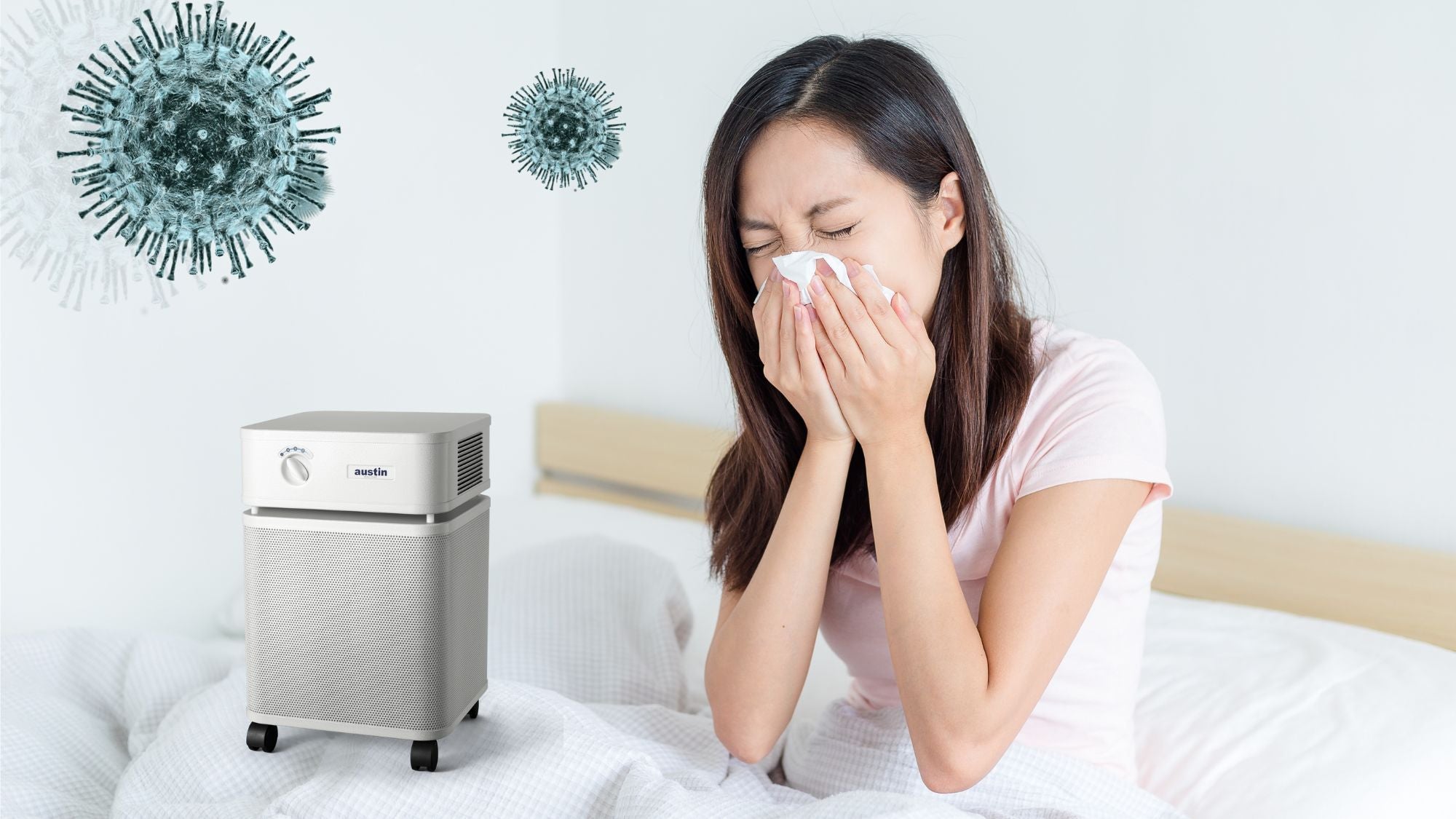
Austin Air purifiers reduce the number of virus particles circulating in the air, which lowers how much of the virus you’re exposed to. This could lower your risk of severe illness, since reducing viral load offers the immune system a better chance of fighting the virus.
In addition, research has shown that air pollution from fine particulate matter (PM2.5) can increase the transmission of the virus by reducing immune system functioning. So cleaner air could reduce the spread of the virus. Fortunately, Austin Air purifiers remove PM2.5.
The HEGA Carbon Cloth: a Secret Weapon
In 2009, the Health Protection Agency in the UK carried out a clinical trial with the HEGA carbon cloth found in our Bedroom Machine.
The researchers sprayed aerosols of the MS-2 virus onto layers of carbon cloth. Tests revealed that the cloth trapped nearly 90% of the viral particles. The cloth was also almost 100% effective at retaining the viral particles. And after 6 hours, 99.9998% of the viral particles captured were destroyed.
This proves the HEGA carbon cloth is highly effective at capturing, retaining, and destroying viral particles such as COVID-19 (SARS-CoV-2) and flu. That’s because the MS-2 virus tested here is much smaller (23 to 28nm in diameter) than SARS-CoV-2 and flu viruses (80 nm to 120 nm).
The cloth is also highly effective at removing other contaminants such as bacteria, VOCs, and gasses.
Conclusion
Viral load is a term used to describe the amount of a virus present in an individual’s body. The higher the viral load, the more likely the person is to become sick and spread the virus to others. People with a high viral load are at greater risk of developing severe complications from viruses like COVID-19 or the flu.
Fortunately, we can reduce the viral load by using air purifiers to ensure clean air circulates throughout the home or workplace. Taking these steps can help protect vulnerable individuals and reduce the spread of viruses.
The best way to lower the viral load in the air is using air purifiers from Austin Air, especially our Bedroom Machine.
The Bedroom Machine contains not only 60 square feet of Medical-Grade Certified HEPA Material and up to 15 pounds of activated carbon, but also the HEGA carbon cloth proved to capture and destroy viruses smaller than SARS-CoV-2 and flu.
>>Learn More about the Bedroom Machine from Austin Air.