This year’s wildfire season is already shaping up to be one of the worst on record. At the time of writing, there are around 83 fires burning across the US and 3.5 million people living under red flag warnings. For residents in western states, each new wildfire season is longer and more dangerous than the year before.
What does wildfire smoke do to our air quality?
For anyone living in an area at risk of wildfires, the effects of wildfire smoke are all too familiar, burning, stinging eyes, as well as coughing and wheezing. Recent studies also show that smoke exposure can increase the risk of heart attacks and strokes and is even linked to premature death.
Smoke can travel
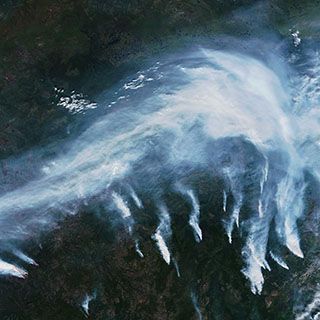
We tend to assume wildfire smoke only really affects the western states. This is where the majority of fires are burning, so it goes without saying, air quality in these areas will be affected. But the size and high number of the fires in the west this year, means we are seeing a drop in air quality as far as Philadelphia. In fact, just recently, air quality advisories were put in place for Pittsburgh, Philadelphia and New York. Vulnerable people were advised to stay indoors, and even healthy people were asked to limit outdoor activity.
Smoke can change as it travels
Smoke from wildfires contains thousands of toxins. Along with vegetation, wildfires burn various manmade materials, including paint, plastics, metals and chemicals. The result is a toxic mix of particles and gases that contain carbon dioxide, benzenes and formaldehyde. Some pollutants hang around in the air for weeks, so can travel long distances. Smoke from a fire that started in California, could end up many miles away, increasing in toxicity as it travels.
This video from the New York Times gives us a frighteningly clear picture of how smoke from the west is travelling to other parts of the country.
Wildfires create their own weather
In an area larger than Los Angeles, Oregon’s Bootleg fire has become so intense, it is actually creating its own weather. This happens as the extreme heat from a fire, forces air to rise rapidly. Any moisture from burning trees and plants then evaporates into the rising air. This results in clouds known as ‘Pyrocumulus’. These mushroom-like clouds can create lightning and extreme winds, making the situation even more challenging for firefighters.
Let the Austin Air HealthMate Plus™ keep you safe this wildfire season
There is no doubt, wildfire season is longer, bigger and more ferocious, as each year passes. If you live in an area at risk of smoke from wildfires, we recommend the Austin Air HealthMate Plus™. Using a combination of activated carbon and Medical Grade Certified HEPA Material, the Austin Air HealthMate Plus™ is designed to remove a wide range of chemicals, including those found in wildfire smoke.
If you’d like more info on how to stay safe this wildfire season, please take a look at our shop page HERE.