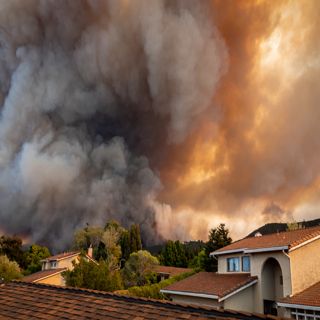
Wildfire season 2020 was without doubt, one of the worst we have ever seen. A combination of global warming, high winds and Covid-19 resulted in 31 deaths, millions of acres destroyed, and many families left homeless.
A ‘wildfire year’ is the new norm
According to the US Department of Agriculture, a wildfire season, that takes place in summer and fall, is a thing of the past. For many states, a ‘wildfire year’ is becoming the new norm, with fires burning nonstop all year.
Particulate Matter is not the only danger
Until recently, the dangers of wildfire smoke have focused on ‘Particulate Matter’ (PM10 and PM2.5). When inhaled, these fine particles of soot, chemicals and gases, cause various respiratory issues, heart disease and strokes. However, a team of scientists from the University of Idaho and the University of California, has been looking at other ways smoke from wildfires can impact our health.
Wildfire smoke carries fungus and microbes
They found that smoke often contains a dangerous mix of fungi and microbes, as well as PM10 and PM2.5. These microbes can exacerbate asthma symptoms and cause diseases such as Valley Fever, if inhaled.
According to Dr Kobziar from the University of Idaho,
“We have found a number of microbes that are commonly known to cause respiratory ailments – things that can trigger asthma, for example,”
These contaminants are often found in soil but as fires spread and soil is disturbed, the microbes are carried along, often for many miles, hitching a ride in the smoke.
Microbes can survive and often thrive in high temperatures
According to Dr George Thompson, associate professor of Clinical Medicine at the University of California, Davis, and another lead author of the study.
“Some microbes in the soil appear to be tolerant of, and even thrive under, high temperatures following wildfires.”
Air pollution from wildfires is up to 10 times more harmful than other pollutants
In another study, this time from a research team at Scripps Institution of Oceanography at the University of California, San Diego, pollution from wildfires is up to 10 times more harmful than other types of pollution such as exhaust fumes.
Wildfire smoke causes a 10% rise in hospital admissions
The team looked at data from hospital admissions over a 14-year period. They found that when pollution levels rose, due to sources other than wildfire smoke, respiratory related hospital admissions rose by 1%. However, when pollution levels rose due to wildfires, respiratory admissions rose by as much as 10%
Wildfires are undoing so much of the good work
Many cities across the country have made great strides to clean up the air in recent years. But these latest findings look set to reverse that good work, particularly in states such as California, where residents have experienced some of the worst wildfires.
The Austin Air HealthMate Plus™ effectively removes smoke from wildfires
If you live in an area affected by wildfires, we recommend the Austin Air HealthMate Plus™. With its broad-spectrum adsorption it removes a wide range of chemicals and gases, including smoke from wildfires. The Certified HEPA Material filtration used in the HealthMate Plus™ is also highly effective at removing bacteria, fungus and viruses.
If you’d like to learn more about the Austin Air HealthMate Plus™ and what it can do for you, please visit our SHOP page today.