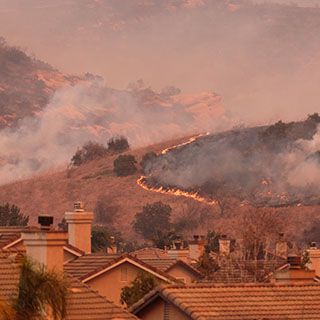
As many parts of the country experience record temperatures, this year’s wildfire season is already set to overtake previous years.
Climate change, an increase in the number of houses in high-risk areas and of course, Covid-19, have all contributed to bigger fires, that destroy more property and endanger lives like never before.
Is staying inside enough? Experts say no.
People living in areas affected by wildfires are advised to stay inside, with windows and doors shut, to avoid smoke inhalation. But is this really enough? According to some experts, the answer is no, it is not.
This statement from Kim Anderson, a researcher at Oregon State University, says it all.
“People think air inside their house is perfectly clean, and that if we close all the windows when it is smoky outside there will be zero contaminants inside. That’s just not true.”
Not all air purifiers will keep you safe.
If you’re living in an area at risk of wildfires, you may have already considered investing in an air purifier. But with so many to choose from, it’s a difficult decision to make. Many promise to protect against wildfire smoke, but watch out, not all air purifiers will keep you safe.
We recommend the Austin Air HealthMate Plus™
Fires consume everything in their path, from plastics, chemicals and metals, to paint, gases and fuels. This mix of materials ensures the smoke from fires is particularly toxic.
The Austin Air HealthMate Plus™ uses a combination of Medical Grade Certified HEPA Material and 780 cubic inches of Activated Carbon, Potassium Iodide Impregnated Carbon and Zeolite. This advanced filter technology guarantees the effective removal of a wide range of airborne pollutants, including smoke from wildfires.
How does it work?
The Austin Air HealthMate Plus™ has 4 stages of filtration, for protection in the most contaminated of settings.
- The first filter traps larger pollutants such as dust, hair and pet dander. In short, the large pollutants we can see.
- The second stage of filtration takes care of medium sized particles, such as mold, spores and pollen.
- The third stage of filtration uses 780 cubic inches of Activated Carbon, Potassium Iodide Impregnated Carbon and Zeolite, for the removals of Volatile Organic Compounds (VOCs), formaldehyde, benzenes, chemicals, gases and odors.
- The fourth stage of filtration uses Medical Grade Certified HEPA Material. Certified HEPA Material removes 99.97% of all particles larger than 0.3 microns and 99% of all particles larger than 0.1 microns, this includes viruses, bacteria and allergens.
Austin Air’s unique 360-degree intake system
Unlike other brands, Austin Air uses a 360-degree intake system. Drawing air into all sides of the filter like this ensures maximum cleaning capacity. We are also the only air purifier constructed using solid steel and a non-toxic powder coated paint. No plastic, no polystyrene and no off gassing.
Unrivalled filter life
We are the only air purifier with a 5-year filter life. No other air purifier comes close to this.
Be prepared this wildfire season, with Austin Air
With wildfires underway in many parts of the country, now is the time to prepare.
If you have any questions regarding the Austin Air HealthMate Plus™, or one of our other products, please do not hesitate to contact a member of the team, we’re always happy to help.
Stay safe this wildfire season, with Austin Air!