Winter is officially here. And the colder it gets, the more we keep our windows shut—trapping pollutants inside our homes. Several things in the home emit dangerous chemicals, gases, and VOCs that can be tremendous risks to our health.
And deaths are ongoing.
Children are especially vulnerable in the winter, spending more time indoors studying, doing homework, and playing video games. They’re breathing in all those toxins for hours at a time.
Here’s what you need to know about the quality of your indoor air over the winter and how to improve it.
Heating Systems Pollute Your Indoor Air
Heating systems are not always well-ventilated. Or they can be dusty. So those pollutants come into the vents.
Water heaters aren’t ventilated. And there’s no filter in place to keep debris from being emitted into the air.
They also emit VOCs (volatile organic compounds) such as benzene, toluene, ethylbenzene, and xylene (BTEX).
Each of these chemicals poses a health hazard:
- benzene is linked with leukemia
- toluene can cause nausea and even death
- ethylbenzene is a neurotoxin that affects brain function
- xylene may cause cancer when inhaled over time
Just a note: if you have a furnace, consider changing the filter every month during the winter.
Wood-Burning Fireplaces and Wood Stoves Pollute Your Indoor Air
Wood-burning fireplaces and wood stoves are major sources of indoor air pollution. It sounds unbelievable, but wood burners emit about 750 times more air pollution than a modern HGV truck!
In fact, wood burners cause almost half of urban air pollution cancer risk.
Wood-burning fireplaces or wood stoves also emit carbon monoxide and other chemicals.
VOCs Pollute Your Indoor Air
As mentioned above, VOCs are volatile organic compounds. They’re emitted from carpeting, furniture, tile flooring, and even paint … right into the air you and your family breathe.
VOCs cause cancer, asthma, and other respiratory problems. The toxic chemicals can get into your bloodstream through the skin and cause headaches, nausea, dizziness, and more.
ASOAs (a VOC) alone could be responsible for up to 900,000 premature deaths every year.
Gas Appliances and Gas Stoves Pollute Your Indoor Air
Gas appliances are another major source of air pollution. Gas stoves, gas heaters, and other sources of combustion all release toxic chemicals into the air.
Carbon monoxide is one of the most dangerous byproducts. It’s odorless and colorless, but it can be deadly in high concentrations. Burning fuels also emit nitrogen oxides (NOx), which can cause respiratory problems in people with allergies or asthma.
For more information on how gas stoves pollute your indoor air, check out our article Thanksgiving Tip #1: How to Reduce Indoor Pollution from Cooking.
The Solution for Indoor Air Pollution
There’s a simple solution for indoor air pollution. The EPA, WHO, and CDC all recommend using portable air purifiers with true Certified HEPA Material filtration. An extensive study by the EPA found that air purifiers with Certified HEPA Material together with activated carbon are the best.
But you need an air purifier with a lot of Certified HEPA Material and carbon; otherwise, the purifier can’t remove enough air pollutants—or will need very frequent filter changes, which quickly adds up in cost.
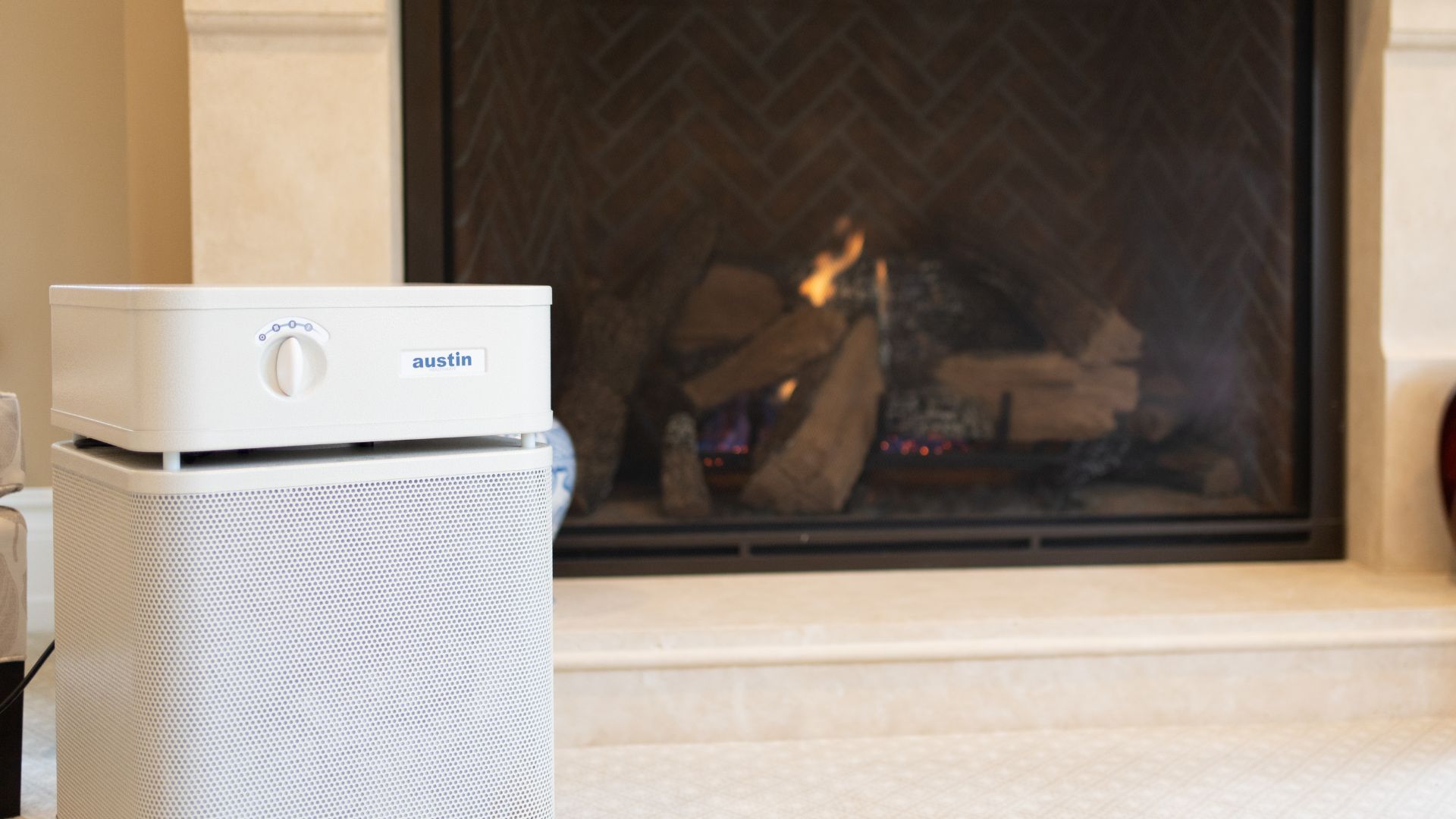
The Austin Air HealthMate has 60 square feet of true Medical-Grade Certified HEPA Material filtration, removing 99% of all airborne contaminants as small as 0.1 microns, including viruses, bacteria, dust, mold, and allergens.
It also contains up to 15 pounds of activated carbon together with zeolite to remove toxic gasses and other chemicals from the air you and your family breathe.
No other air purifier comes close to these specifications.
>>Learn More about the HealthMate from Austin Air.
Conclusion
It may be cozy inside your home during winter, but that doesn’t mean the air is clean.
If you want to breathe easy and make sure your family is safe from harmful indoor pollutants this winter, then a good air purifier is a must-have for your peace of mind.