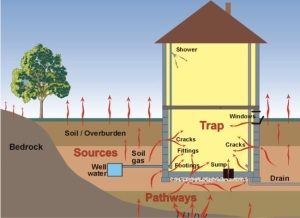
Radon is a gas that occurs naturally as uranium and thorium break down in soil, rocks and water. Outdoors, Radon levels generally remain low, as it dissipates into the air. Nothing too sinister about that you might think. However, Radon is radioactive, and it can find its way into your home, seeping up from the soil, through the cracks and holes in your house foundations. According to the CDC, after smoking, Radon is the leading cause of lung cancer. And as many as 1 in 15 homes in the US have high Radon levels. OK, perhaps not so harmless after all.
Radon is colorless, odorless and tasteless and symptoms of exposure may occur years later, making it almost impossible to detect without carrying out a specific test. Testing for Radon in the home can be run over the short and long term but Radon levels can fluctuate, so short term tests are fairly limited. Testing over a longer period of time will give a more accurate result. The test itself is relatively straightforward. A device is placed in the home, with doors and windows closed and a reading taken.
If low levels of Radon are detected, it may simply be a case of sealing up cracks and holes and improving ventilation in the home, so that the gas can escape. If Radon levels still remain high, a more comprehensive mitigation system may be needed. But even this is relatively simple and inexpensive to install.
If you’re worried about Radon levels in your home, follow this link for more advice.