Maybe an air quality event occurred near you a week ago. Maybe it was two weeks ago. Or maybe it was a month or more. You may be wondering if your air is really safe, even if it’s been weeks or months since the event happened.
The short answer: probably not.
Particle Pollution
Airborne pollutants settle in soil and can be resuspended into the air over and over again. Just because the sky seems clear, doesn’t mean that it is. Some pollutants are invisible, so when the air clears, that doesn’t necessarily mean you’re in the clear.
Particle pollution, also known as particulate matter or PM, is the term for a mixture of solid and liquid droplets suspended in the air. It comes in many different shapes and sizes, and can be composed of many different elements.
In fact, the smallest particles that are the most difficult to see (PM2.5 and smaller) are the most dangerous to human health. While larger, coarser particles (between 10 µm and 2.5 µm) settle relatively quickly, smaller particles remain in the air far longer – for days or weeks.
Weather and Air Quality
Weather can directly impact air pollution and air quality. Some pollutants may be worse in the summer, and some may be worse in the winter. And wind, temperature, and precipitation can affect air quality, too.
Wind
Higher wind speeds usually mean the greater scattering of airborne pollutants. Wind transports airborne pollutants from one area to another, and can even transport them across the country. Air pollution typically disperses based on wind direction or the persistence of wind in one area.
Temperature
Air temperature also affects how air moves, and therefore, how airborne pollutants move. Air near the ground is warmest because the earth’s surface absorbs energy from the sun. Warm air rises and cool air sinks, meaning pollutants do the same.
Cold Temperatures
In cold weather, some pollutants may be more visible. Industrial emissions typically remain constant throughout a calendar year. But, particulate matter and carbon monoxide typically increase due to wood burning, as well as vehicle emissions from cars idling while running to heat up.
Hot Temperatures
Some pollution, like ground-level ozone, is made more efficiently in warm weather because the reaction that creates ozone needs sunlight. When temperatures are hot, ozone reaches dangerous levels. Heat also increases particle pollution.
Droughts can also increase pollution, not just because of the extreme heat conditions, but also because of the likelihood for forest fires, which add carbon monoxide and particle pollution to the environment.
Precipitation
Usually precipitation is valuable, especially in times of wildfire or drought. It not only nourishes plants and replenishes water supplies, but it also attracts tens to hundreds of suspended pollutants.
Particulates may be washed from the air by precipitation. When the rain falls from the atmosphere to the ground, it takes pollutants with it. When this happens, pollutants may settle on land, or be resuspended in the air. Particulates may also settle, dissolve, or do both in water.
If it rained during or after a chemical incident or wildfire, pollutants may have settled into the soil and can be continually problematic. When soil dries, pollutants can continue to be resuspended and redispersed when soil is disturbed by farming, vehicles, people, pets, and more. People and pets can then carry these pollutants into their homes.
If pollutants were already brought into the home through HVAC air intake, air conditioners, windows, doors, and more before wind or rain cleared the air, then it can continually be resuspended in the home too.
Atmospheric Turbulence
The ground heats throughout the day and becomes more turbulent, or characterized by chaotic changes in movement. This is especially true at midday. Air turbulence causes pollutants to disperse. In contrast, at night, when air is more still, pollution is not easily dispersed, resulting in more concentrated, localized pollution.
Visibility
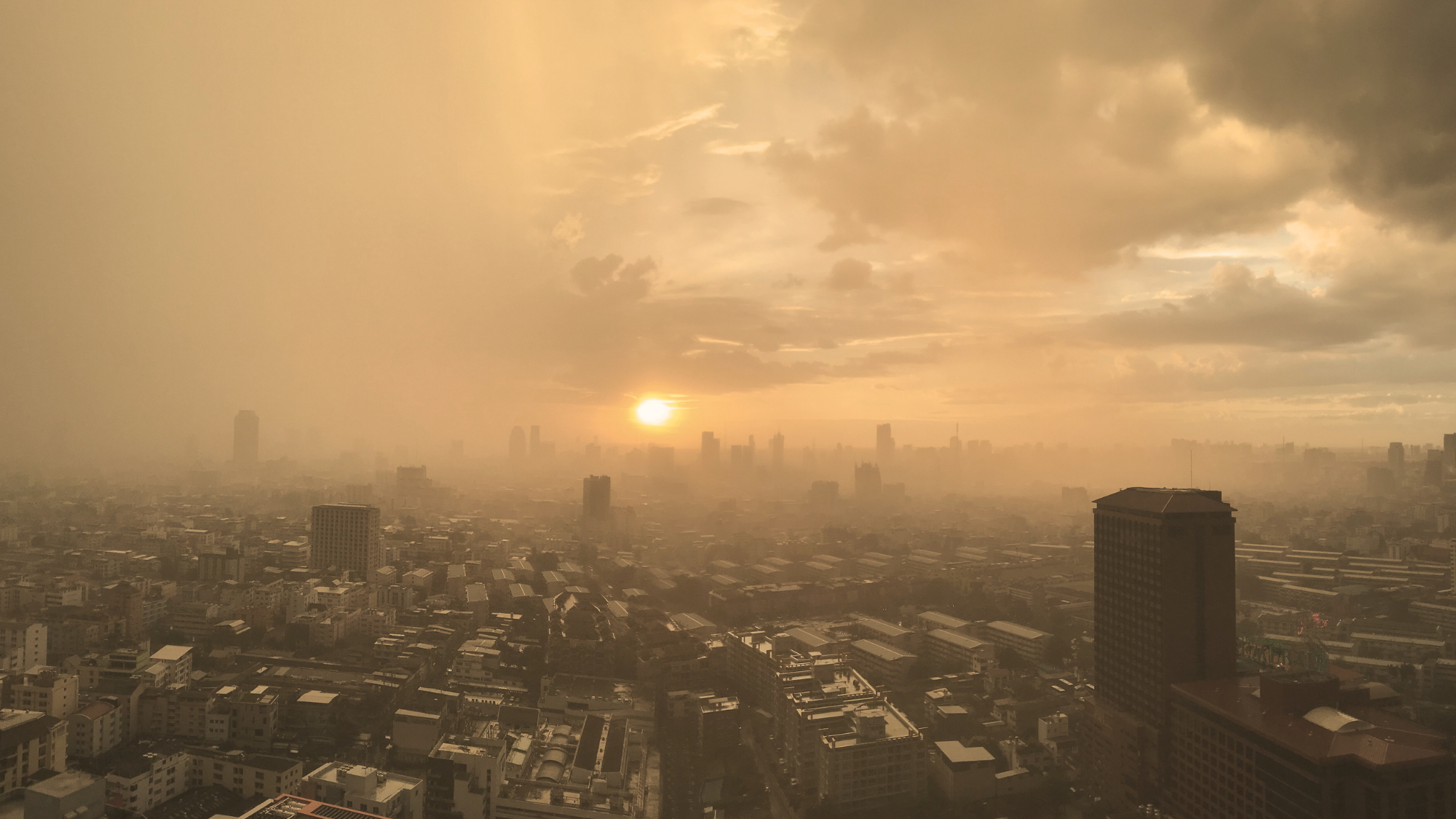
Airborne pollution can also affect visibility. Once in the air, airborne pollutants generally take a significant amount of time to settle, reducing visibility.
After an air quality event, Austin Air is prepared to help you stay safe and informed – whether it’s a chemical spill, train derailment, wildfire, or other disaster. Shop Austin Air purifiers at https://austinair.com/filters/.